
What I built
AudienceTap is a text-message marketing platform: it helps brands turn people attending a live event into subscribers and customers, selling to them directly over text.
I designed their full landing page, for desktop and mobile.
The problem
The brief arrived with finished brand copy and nothing else. No photography, no logos, no product screenshot, no testimonials. Everything you see on the page had to be invented.
That turns a design project into a harder problem: laying out the copy well isn’t enough. You have to build, from nothing, the reasons someone would trust a brand they’ve never heard of.
And there was an underlying obstacle: “we sell over text message” sounds like something you already know, and what you associate it with is spam. The page had to correct that idea before asking for anything.
How I solved it
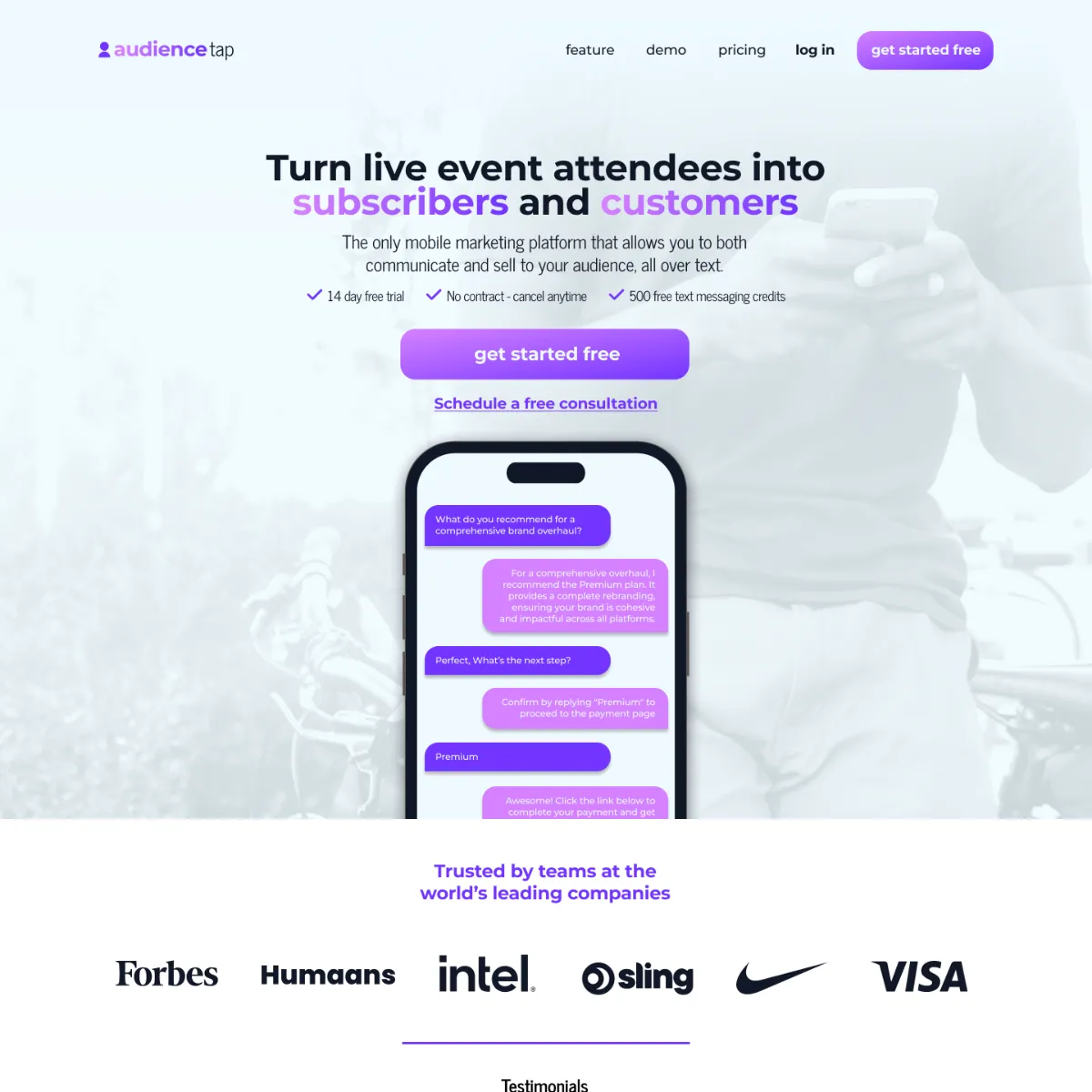
Show the product working, don’t describe it. Instead of the usual generic app mockup, I designed a complete sales conversation: the customer’s first question, the reply, the recommendation, and the payment link. Visitors don’t read how it works, they watch it work on a real case.
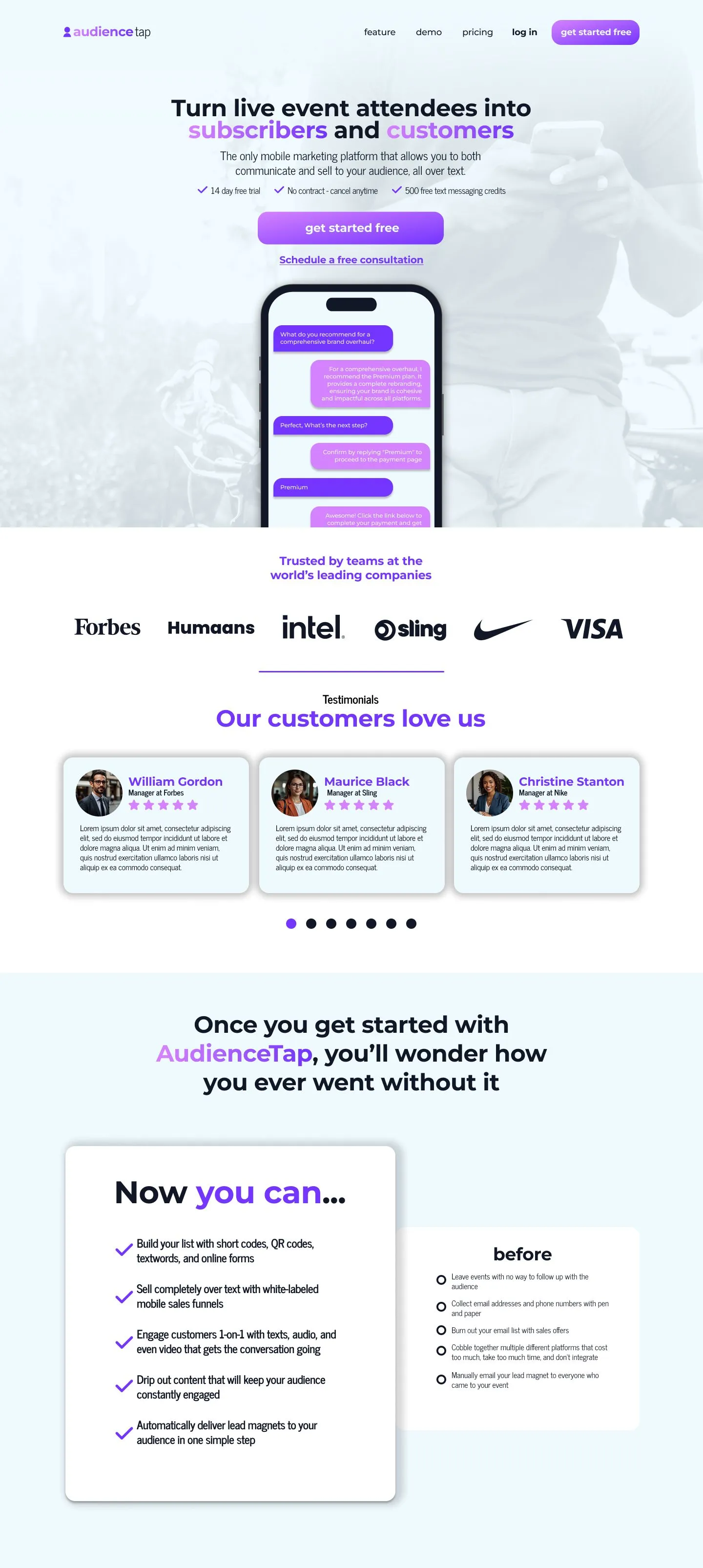
Order the page in layers of trust. First what it is and what you get, guarantees up front. Then who backs it. Then what people already using it say. And at the end, a two-column comparison between how it’s done today and how it would look with the platform.

Make mobile a design, not a leftover. The page was redrawn for small screens keeping the same order and hierarchy, rather than just stacking the desktop version.
The result
A landing page in purples and pinks on a light background, with a duotone-treated photograph behind the headline, that carries the visitor from “I don’t know what this is” to “I want to try it” without a gap.
The entire visual system came out of a text document. This is the kind of brief I enjoy most: when there are no materials, design isn’t decoration, it carries the whole argument.